Store closures have become increasingly common among retailers as they shrink their footprints to adapt to changing consumer habits and rising costs.
Coresight Research projects that 7,900 stores will close in 2026, while 5,500 stores will open, resulting in an estimated net loss of 2,400 stores among chain retailers.
Founded in 1861 in New York City, Bloomingdale’s is an upscale American department store chain known for its designer labels, luxury goods, and signature “Little Brown Bag” shopping bags.
Owned by Macy’s, Inc. (M), Bloomingdale’s has maintained a fairly stable footprint compared to many retailers, The Wall Street Journal reported. Still, the luxury department-store chain knows the importance of giving consumers ongoing reasons to visit in person.
Now, Bloomingdale’s is joining a major retail trend by transforming its stores to create new shopping experiences.
Bloomingdale’s creates immersive experiences to bring customers to stores
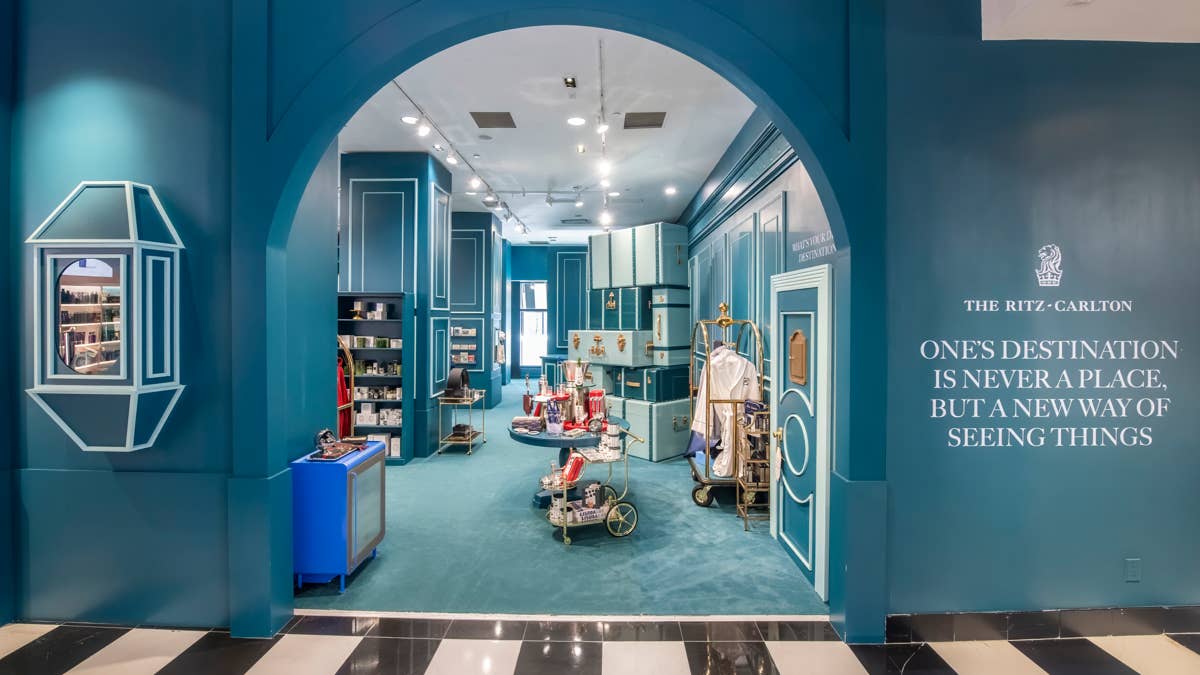
Bloomingdale’s has partnered with The Ritz-Carlton to transform its New York City 59th Street flagship into Hotel Bloomingdale’s, an immersive in-store shopping experience running through Oct. 19, 2026.
Hotel Bloomingdale’s combines The Ritz-Carlton’s hospitality with Bloomingdale’s fashion, beauty, wellness, home, and travel brands to encourage product discovery.
As part of the launch, Bloomingdale’s is unveiling Late Checkout: A Ritz-Carlton Story, featuring a curated assortment of more than 55 brands, including 14 that are new to Bloomingdale’s. The assortment is organized into five hotel-inspired destinations: Travel, The Spa, Room Service, Souvenirs, and Newsstand.
The experience also includes dedicated windows, pop-ups, activations, and an exclusive 26-piece AQUA x Nicky Hilton collection for women and kids.
The immersive experiences showcase some of Bloomingdale’s most popular brands and include:
- Studio 59: A Ritz-Carlton-inspired hotel bar with destination-inspired cocktails influenced by iconic Ritz-Carlton properties.
- La Prairie Spa: A limited-time spa residence and retail experience by La Prairie.
- Nespresso Coffee Bar: A luxury hotel lobby café offering premium coffee beverages by Nespresso.
- Abbode Customization: Complimentary embroidery for Abbode purchases.
For customers unable to visit the Bloomingdale’s 59th Street flagship, the retailer will also bring the KILIAN PARIS Bar experience to select stores. The art deco-inspired hotel lounge experience will offer specialty cocktails, mixology classes, immersive fragrance consultations, custom bottle engraving, and complimentary fragrance samples.
“We’re giving customers new ways to discover, explore, and experience Bloomingdale’s through unexpected moments, meaningful interactions, and a dynamic mix of fashion, beauty, wellness, and lifestyle,” said Bloomingdale’s VP Integrated Marketing Kevin Harter in a company announcement.
Retailers host unique experiences to encourage in-store shopping
Bloomingdale’s is not the only retailer transforming its stores and creating experiences designed to encourage customers to shop in person.
Its parent company, Macy’s, has used experiential events as part of its retail strategy for decades. The company hosts major annual events, including the Macy’s Thanksgiving Day Parade, Santaland at Macy’s Herald Square, Macy’s Fourth of July Fireworks, and Macy’s Flower Show.
In 2025, JCPenney debuted the first-ever official iHeartRadio Jingle Ball 29-piece apparel collection in partnership with iHeartRadio’s long-running holiday concert series.
Target has also experimented with more experiential elements in its stores, including seasonally themed displays and decorations, seasonal products and collections, and promotional content across its social media channels.
These examples reflect a broader effort among retailers to give shoppers new reasons to visit physical locations.
Why retailers are investing in immersive experiences
Retailers’ investment in immersive experiences comes as physical stores increasingly function as marketing platforms and experiential destinations alongside their traditional role as places to shop.
Experiential retail is a strategy retailers are using to give consumers unique and memorable reasons to visit physical stores that complement what they can experience online.
Here’s some of my previous coverage of retail strategy:
- Iconic retailer makes an unlikely 120-store comeback
- Shein rival opens stores while everyone else closes them
- After closing nearly all locations, beauty brand gets lifeline
This is one reason brands continue to invest in flagship stores, which are typically larger than standard locations and may feature distinct architecture and design, exclusive merchandise, events, and hospitality experiences.
Fernando Aguileta de la Garza, a communications, branding, and fashion culture expert with Elle Education Business, said flagship stores can enhance a brand’s image while creating opportunities for direct communication with consumers.
“An effective flagship store attracts new customers and keeps the current loyal ones hooked to the brand. The aim of a flagship store is to stimulate the emotional sensations and physical attributes that the brand possesses and showcase them to the customer.”
Despite ongoing store closures, brick-and-mortar retail remains a significant part of consumer spending. Physical retail accounted for approximately $14.4 trillion of the $18.9 trillion in total retail sales in 2025, according to Euromonitor research cited by EY.
That helps explain why retailers such as Bloomingdale’s are experimenting with ways to make physical stores destinations rather than simply places to complete a transaction.
By combining shopping with hospitality, events, services, and other experiences, retailers are seeking new ways to make the in-store experience more distinctive for consumers.